Watts
On August 11th, 1965 Watts exploded in 6 days of rioting resulting in 34 deaths, over 1,000 injuries, nearly 4,000 arrests, and $40 million in damages, 61 years ago tomorrow.

3.
Watts
(South Central Los Angeles, CA. — August 11th, 1965)
LAPD Officer Bill Sanka: I was still in the Los Angeles Police Academy when I went out on patrol for the first time. I mean, I felt like a fucking duck out of water walking for the first time into the station for roll call, because they tell you in the academy you should be spit and polished and perfectly clean.
And when I walked in, it was a sight to behold; guys with two or three fucking guns in shoulder holsters, switchblades to clean their fingernails, and black leather jackets, and fucking saps hanging out of their pockets, and fucking sirens going off!
It was probably one of the most exciting things I’d ever fucking seen!
I mean this was the real thing; this was what I signed on for!
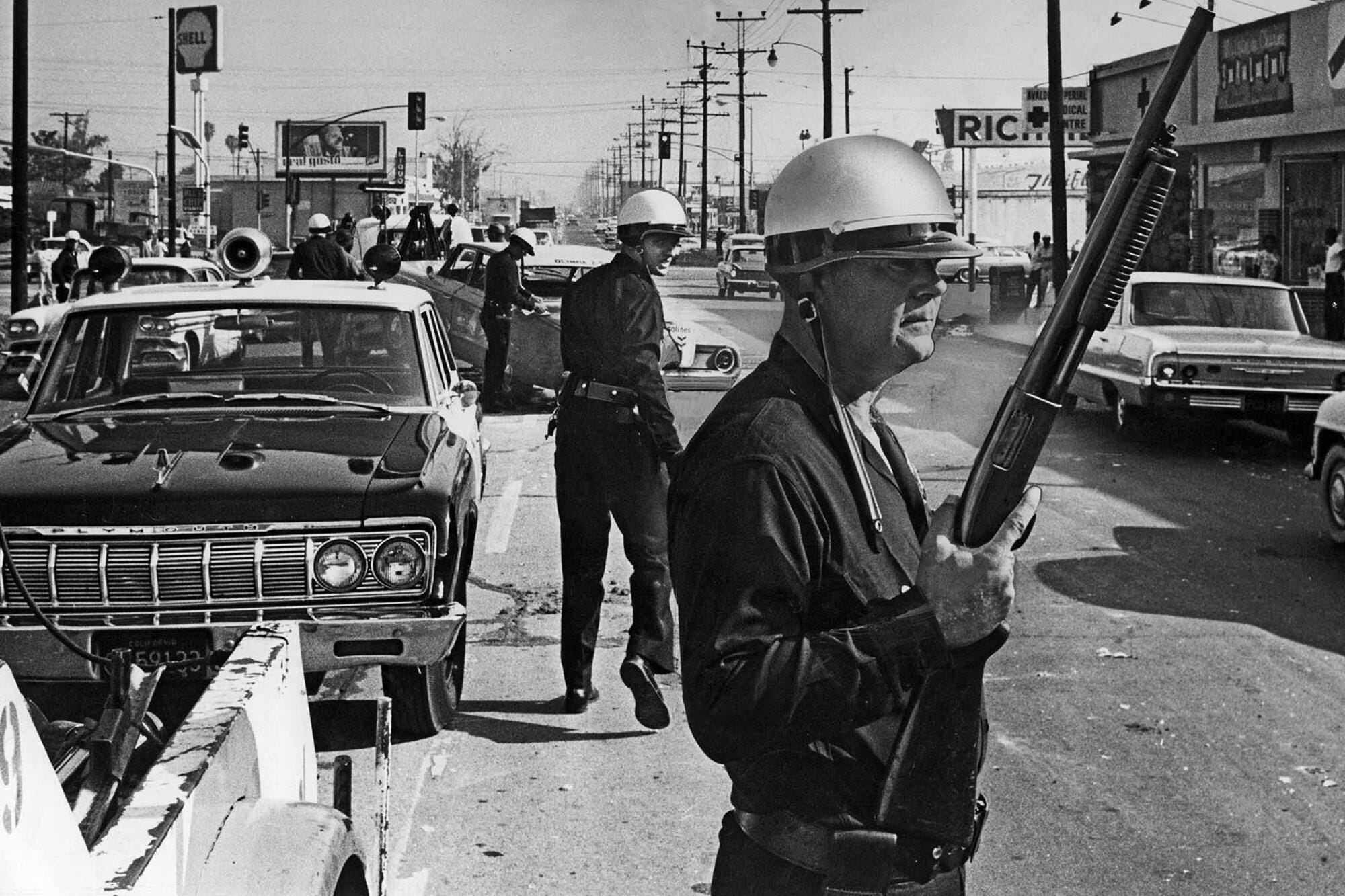
LAPD Officer Tommy Jacquette: The Los Angeles Police Department was supposedly one of the finest police departments in the world, but I knew it was one of the most racist and brutal.
LAPD Officer Norman Edelen: I worked on the Watts substation desk for almost two years, before I went on patrol. There were six black cops in 77th, and I made the seventh. We were uneven numbers, and because black and white cops didn’t work together in patrol cars.
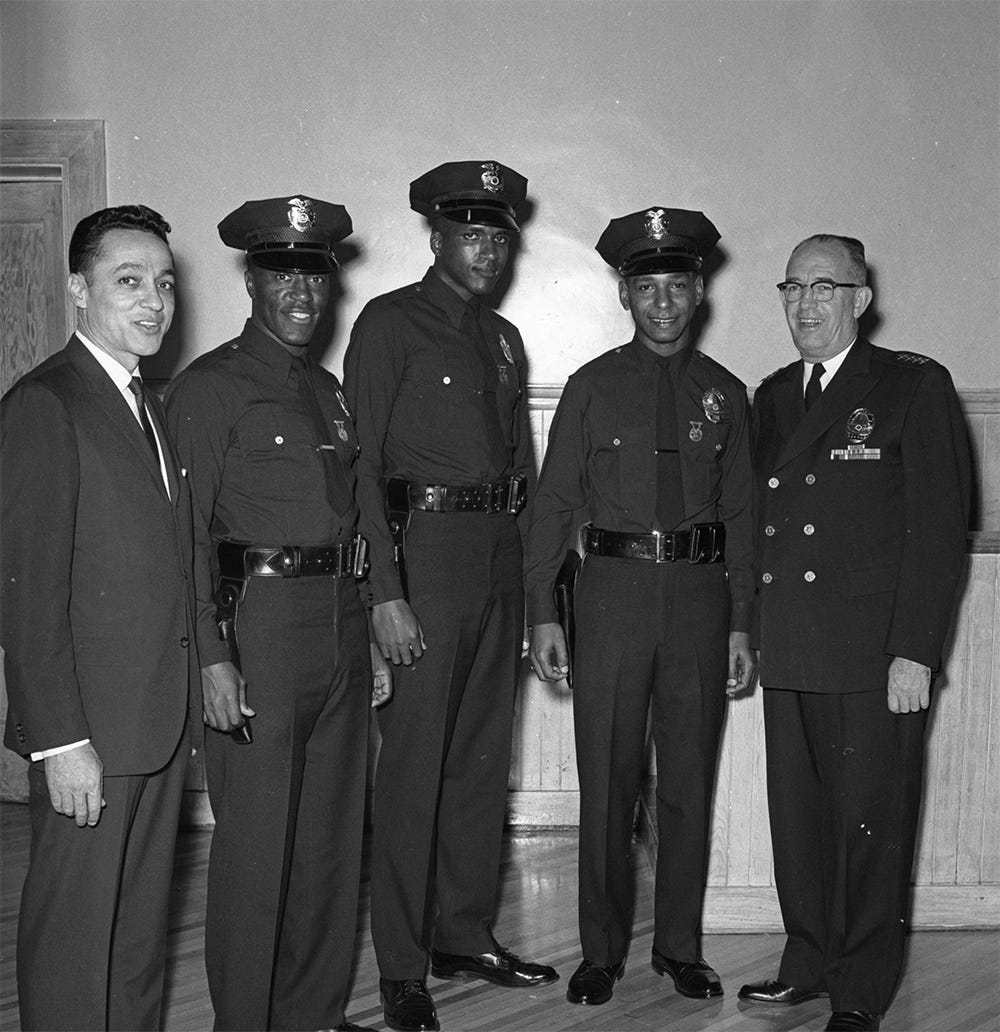
LAPD Officer Bill Sanka: We we’re out patrolling University Division, one of the worst parts of town, and we see this Corvair moving kind of slow, driving by the park, with his lights off, and Duke D’Amato, a heavy-handed cop, who already had a reputation of being an asshole, says, “What the fuck is that?”
Corvair’s were real popular then, the black kids down here in South Central were stealing the shit out of them, they just loved them. They were just real popular, and we had these four-little ditty-bops, probably 14 or 15 years old-- just these four little heads bobbing in the car. The driver was so little, he could barely see over the steering wheel.
I was trying to get the plate number, and Duke’s got his flashlight out, trying to shine it on the plate, trying to get the headlights positioned, and he says, “Run the plate!”
I had the microphone in my hand, and I forgot our call sign, I couldn’t remember the fucking number, and he grabbed the microphone out of my hand and called the plate in. The car came back stolen and the dispatcher asked, “What is your location?”
Duke told them, “I think we’re at 45th and Woodlawn…”
Well the Corvair takes off, they whipped a corner really quick, and we were driving one of those 1965 Plymouth black and whites, that were faster than shit, and we just couldn’t lose them, So we pulled the Corvair over, and Duke got out, he’s got the high beams on them, and he’s screaming at them, “Get your fucking hands up where I can see them!”
The windows were up in the Corvair, so he said, “Roll the window down, keep your hands where I can see them….”
There were four of them in the car, they were joyriding, and they’ve all got their little hands up. So Duke gets them out, one by one, has them come around to the trunk, and says to me, “Keep your eye on them partner, and don’t let them fucking move…”
I’m kind of watching them as they get out, and he’s got all four of them around the trunk of the car, and he says, “Go ahead and shake them down….”
One by one, I shake them down, but I knew I was doing it too fast, that I should have gone slower in case they had a weapon, but I just wanted to get it done.
So I got through all four of them, and Duke says, “Why don’t you check their legs too?”
I went back and frisked them from the waist down, checking their legs.
Then Duke says, “How may sets of cuffs have you got?”
I said, “Just this one…”
He says, “Alright, go ahead and cuff that little motherfucker, and then go get the other set in my briefcase…”
So I went back to the car, and I got a set of cuffs from his briefcase, and we hooked two of them up together. We’d requested a tow truck to tow the Corvair; we had the kids in the car, and then Duke comes back and pulls out a fucking sap, a small truncheon, and he gets in the front seat and just starts beating these kids!
He was just thumping the shit out of them!
The kids were all yelling and screaming, and I’m watching this, and looking at Duke, like, “What the hell’s going on here?”
I mean, once you got the suspects cuffed and under control, the game’s over.
That’s why I was just taken aback; these little hematomas were coming up on their foreheads, these shiny little knots on that black skin from blunt force trauma. It was just so unnecessary, but what the hell could I do about it? It was my first time out on patrol!
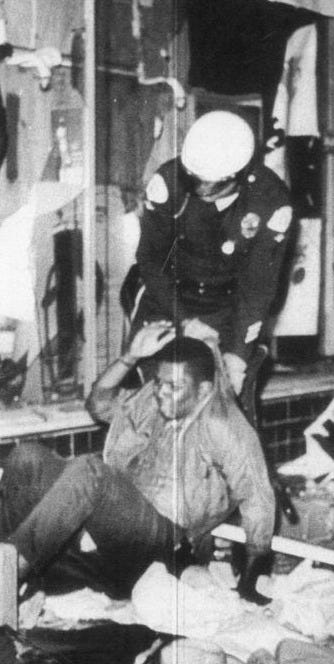
LAPD Officer Norman Edelen: I went to 77th to familiarize myself with the station, and pulled into the lot, went in the back door, and boom, this other cop hammer-locks me into the wall, and says, “How many times do I have to tell you people not to come in this station?”
Another cop who’d been at the door, smoking, said, “He’s a cop from Wilshire,” and the other officer released me. Then, when I checked in, I opened my locker, and there was a shrunken head with an NAACP bumper sticker. I just threw it in the trash.
Dr. Perry Crouch: August of 1965, it was HOT!
LAPD Officer Lee Minkus: It was hotter than hell, maybe 93 or 94 degrees, and when it gets that hot, you can just smell the heat. We’d spent the first four hours patrolling Gardena, Lawndale, Hawthorne, and then we started moving toward Watts.
It was at Avalon and El Segundo when I saw the suspect make a wide turn. Then a black gentleman pulled up to my motorcycle, and said the guy was drunk, so I pulled him over at 103 and Avalon.
Marquette Frye: Me and Ronnie were coming home from a friend’s house, when this officer on a bike stopped us. The cop asked to see my license, but I didn’t have one because I lost it a month ago in Long Beach.
Robert Conot [Author]: The cop said, “You know you were going fifty miles an hour in a 35-mile zone?” And Marquette laughed and said, “Aw, officer, that old car wouldn’t do more than thirty-five if you shoved it off a cliff!”
LAPD Officer Lee Minkus: Marquette was a very happy-go-lucky drunk. He thought everything was a joke.
Marquette Frye: The reason that most people started gathering around was because I was joking with the officer, I mean, we was getting along.
Robert Conot: Officer Minkus asked, “Have you been drinking?”
Marquette Frye: I had been drinking screwdrivers, vodka and orange juice, but I wasn’t drunk, because I don’t drink that much. I told the officer that I was only a half block from home, and that there was no way to have driven that far, if I had too much to drink. I even offered to walk the rest of the way home, because my father was coming home soon, and he could come get the car. But he asked me to walk a straight line. After I did that, I asked him, “Do you want me to walk backwards?”
Walter Crawford: The guy was drunk; he couldn’t walk the line.
Robert Conot: Officer Minikus asked him for his birth date, address, the color of his eyes, the color of his hair, and Marquette said, “It’s black, man! I’m black all over, can’t you see!” He was doing a little jig.
Marquette Frye: There were ten or twelve people standing there, and some of them laughed. The officer said, “You’re a real comedian, aren’t you?” But he wasn’t mad or anything.
Robert Conot: Officer Minikus went to the motorcycle, unhooked the radio mike, and called for his partner, Bob Lewis, and also asked for a transportation car to take Marquette to jail.
Jerry Cohen: Robert Lewis, Minikus’ back-up officer, and Larry Bennett, driver of the Highway Patrol transportation vehicle in the area, were nearby and responded quickly.
Marquette Frye: This other officer happened to drive by in his car. He acted like he thought the other officer was having some trouble.
Robert Conot: Bob Lewis parked his cycle and said, “What have you got?”
Minikus said, “A deuce,” using police slang for a 502.
Lewis asked, “Who’s the one under arrest?”
There were now several persons within a few feet of the motorbike.
Minikus pointed to Marquette, who said, “Man, I’m not drunk, can’t you see I’m a good fellow who wouldn’t diddledybop nobody?!”
Marquette Frye: The other officer, who had just come up, went to get a shotgun from the patrol car and started waving it at the crowd. Somebody said something to him, and he said something back.
Louie Robinson: Meanwhile, Mrs. Rena Price, Marquette’s mother, had been told of her son’s trouble by a neighbor and rushed to the scene.
Mrs. Rena Price: One of the neighbors came and got me. I went out to see what was going on.
Walter Crawford: Mrs. Price said, “Something’s wrong with you. Are you drunk?” Marquette, put his arm around her shoulder, said, “Mama, I’m not drunk.”
Mrs. Price said, “You’ve been drinking, I can smell it on your breath! You know you shouldn’t drive when you’ve been drinking! You better go with the officers...”
He said, “But, Mama, I’m not drunk…’’
Douglas Martin: Mrs. Price shrugged his arm away from her shoulder and said, “You’re not acting normal. You’re not acting right. Get away from me!”
LAPD Officer Lee Minkus: It was his mother who actually caused the problem. She got upset with the son because he was drunk. He blew up.
Mrs. Rena Price: They said he was drunk driving, but he wasn’t drunk driving.
Donald Whisenhunt: Marquette, who had been peaceful and cooperative, pushed his mother away and moved toward the crowd, cursing and shouting at the officers that they would have to kill him to take him to jail.
Robert Conot: Marquette screamed, “You motherfucking white cops, you’re not taking me anywhere!”
LAPD Officer Bob Lewis: He was about half crying and screaming and jumping around like he had gone out of his mind.
LAPD Officer Lee Minikus: He took a swing at me with his right hand, and I blocked that blow with my arm, and stepped back two or three paces. Then I told him he was under arrest and why didn’t he come peaceably?
Robert Conot: Bob Lewis returned quickly to the motorcycle to broadcast a Code 1199, “Officer Needs Help,” over the radio.
Jerry Cohen: At that moment two other Highway Patrolmen, arrived, first came Wayne N. Wilson, and Sergeant Veale J. Fonville was seconds behind him.
Wilson rushed to assist his fellow patrolmen with Marquette.
Robert Conot: Officer Wilson swung the baton and caught Marquette with a blow to the forehead, above the left eye. Then Wilson jabbed him hard in the stomach. Marquette doubled over. Instantly Minikus caught his head in a vise, and, with the fight gone out of him, had no trouble leading him to the patrol car.
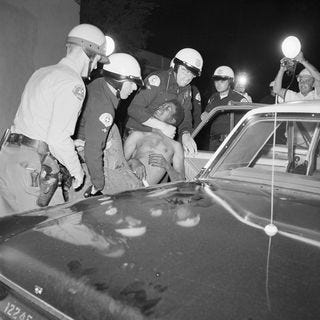
Mrs. Rena Price: I was begging them not to hit him or not to shot him.
Robert Conot: Throwing him across the front seat, Minikus pulled Marquette’s arms behind him, and, bending over him, started to handcuff his wrists.
Mrs. Rena Price: After they handcuffed Marquette, they kicked him and beat him in the front seat.
Dr. Perry Crouch: I was right there when the officer started calling him “nigger boy” and all that stuff right here. And his mother said, “His name is Marquette. You don’t have to call him like that!”
He told her, “Shut up, you black bitch, stay in your place! Get your black ass out the way, don’t be interfering,” and pushed her.
And when he pushed Ms. Price, then him and Marquette got to tussling.
Then she jumped on his back.
LAPD Officer Lee Minikus: His mom jumped on my back, and his brother was hitting me.
Mrs. Rena Price: They were holding a shotgun right to his head.
Donald Whisenhunt: The original group of twenty-five curious spectators grew to two-hundred and fifty.
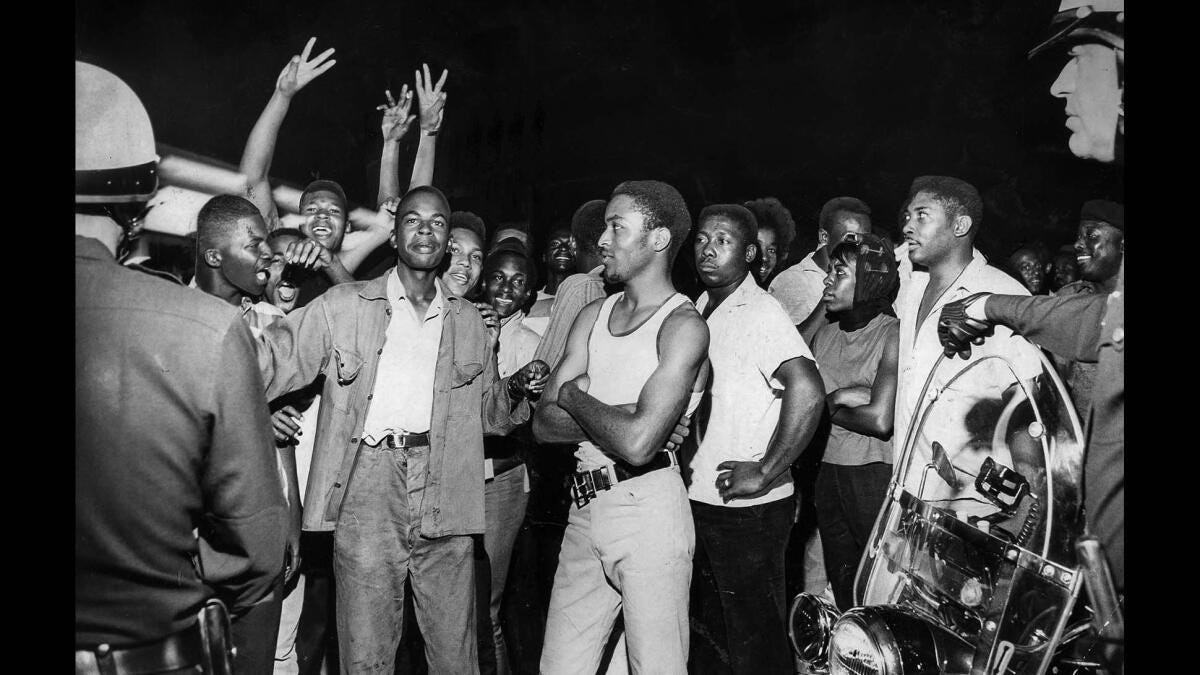
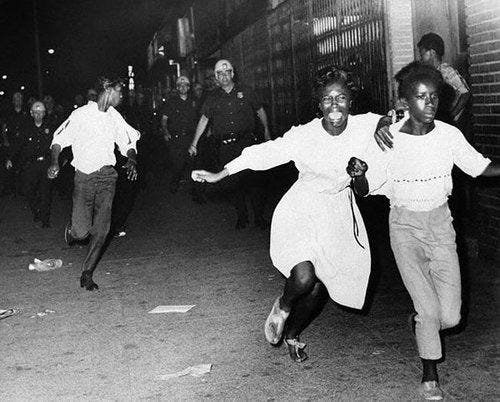
Tommy Jacquette: After they took Marquette away, the crowd began to gather, and the police tried to disband the crowd. The crowd would retreat, but then when the police left, they could come back again.
Donald Whisenhunt: As the officers were leaving the scene, someone in the crowd spat on one of them. The police stopped withdrawing, and two highway patrolmen went into the crowd and arrested a young Negro woman.
Lancine Holland: When the person spat, the policeman grabbed a woman so strong that her hair rollers fell out. I got in my car and left the scene.
Dr. Perry Crouch: The crowd then swelled to about a hundred and fifty to maybe two hundred, and then a bottle sailed over the thing, BAM, and it was on.
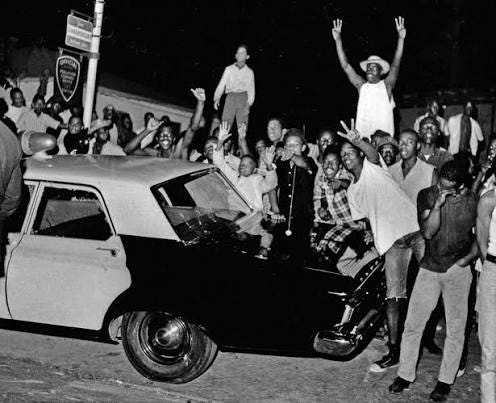
Tommy Jacquette: It sort of turned into a full-fledged confrontation with the police, and a police car at Imperial and Avalon was set on fire.
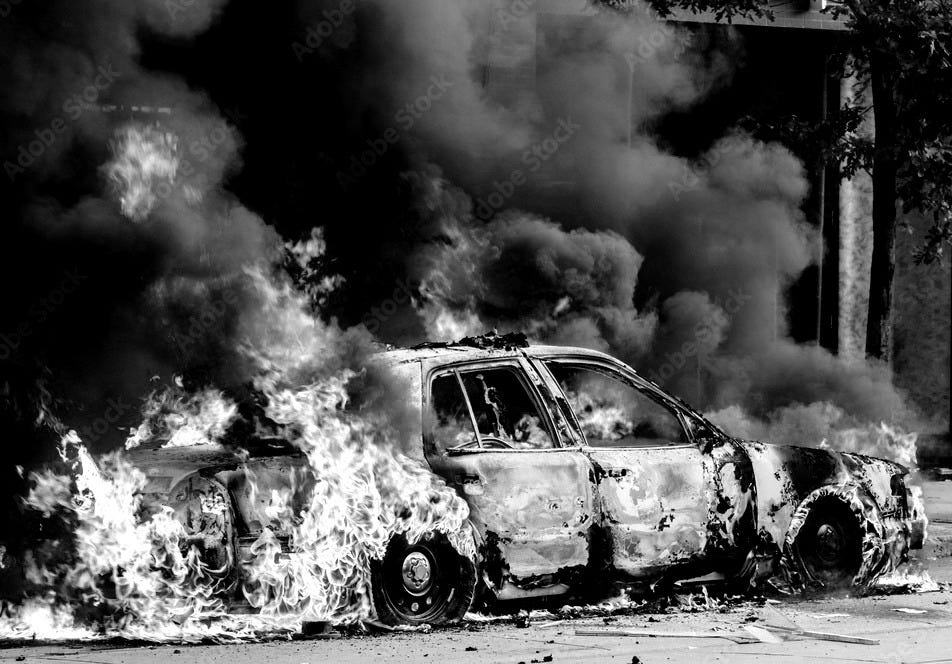
Lancine Holland: At Shoprite, where my husband used to work, they burned the market. You could hear people shooting; you’d witness people running with furniture, food, liquor, anything they could grab. It was just horrific.
Tommy Jacquette: I was throwing as many bricks, bottles and rocks as anybody. My focus was not on burning buildings and looting, my focus was on the police.
Betty Pleasant [Reporter] : The mob progressed to about Compton Avenue, to the one department store in the neighborhood, and they attacked it. They busted out all the windows and walked in and started throwing merchandise out of the broken windows.
A guy threw me a blouse, he said, “Here, little sister, this is for you…”
I was just standing there with my mouth open.
So he threw me this really cute, peach colored blouse, which I looked at, and immediately dropped to the ground, because I couldn’t very well cover the story while I was holding loot in my hand.
Then they threw a Molotov cocktail and burned it to the ground.
I asked one of the guys who was throwing the Molotov cocktails, why he was doing it, and he said it was to, “Get back at whitey!”
And I said, “I can dig it!”
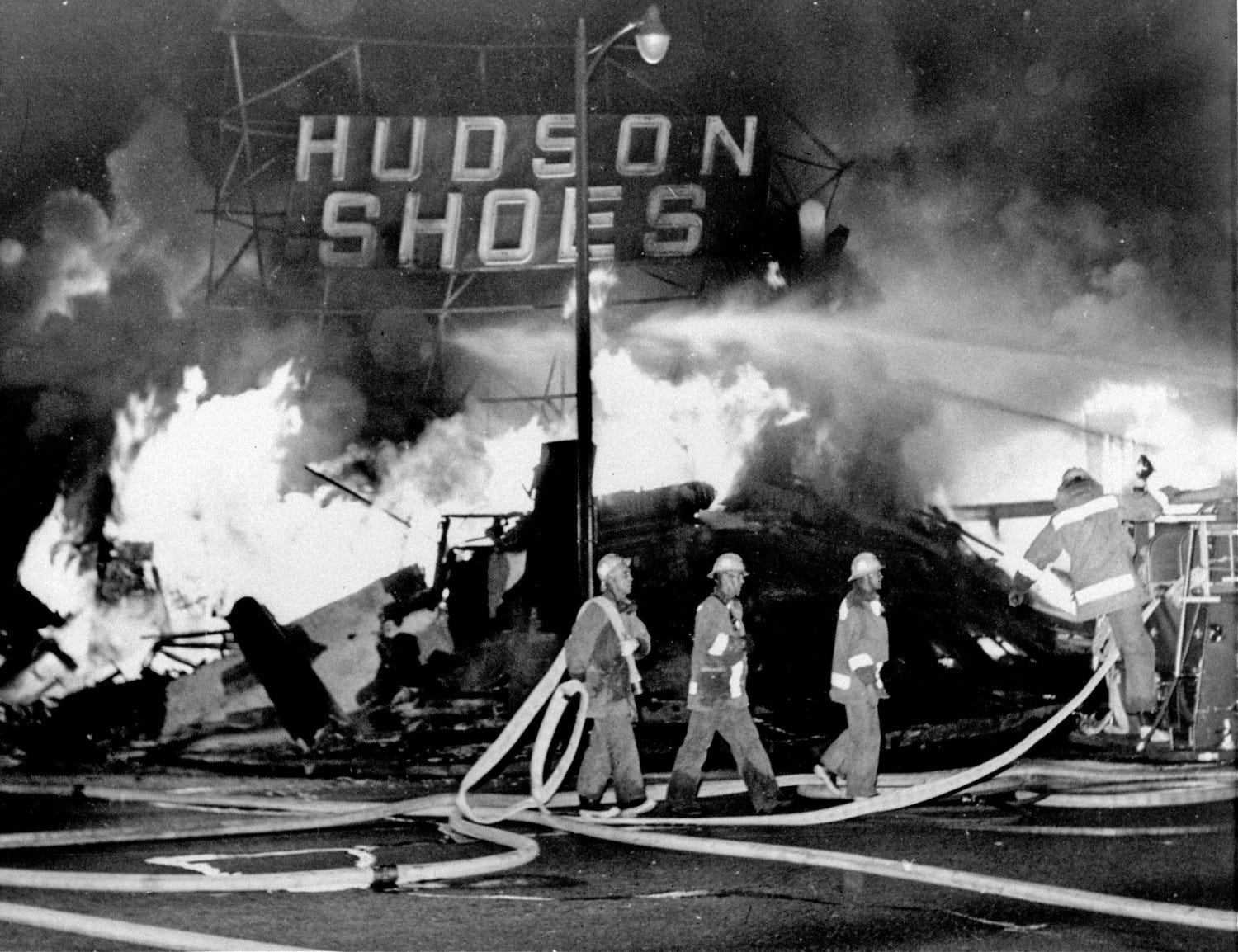
Victoria Davis: The buildings were burning, and we had to put the windows down because we couldn’t breathe. We were afraid that the house was going to burn down; there were embers in the sky.
Betty Pleasant: Nat Diamond’s furniture store was being attacked, and a guy walked out with a sofa on his shoulder.
Stan Diamond: On television, we were seeing pictures of our store, and people walking out with ranges and sofas and TVs, so we called the police, and they said, “Well, if you value your life, you’ll stay away…”
Betty Pleasant: They ultimately burned Nat Diamond’s, with screams of “Burn, Baby, Burn!”
Stan Diamond: We saw on television that it was going on, people were turning cars over…
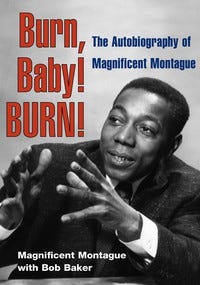
Magnificent Montague: [Disc Jockey] I was falling asleep in my home in Brentwood, when all of a sudden, I heard that chant on the TV news, “Burn baby BURN!”
Wait a minute. That’s mine! The rioters are screaming it? They can’t do that! They can’t steal what I invented! I’d been screaming, “Burn baby BURN!” on the radio for two years; 1963 in New York, and ‘64 in Chicago. I’d slap a record I loved on the turntable, let it kick in, and shout into the mike, “Burn baby BURN!”
And kids would call up, shouting it back at me.
Walter Mosley: I don’t think that there was a black man or woman in America who didn’t understand why it was happening. Everybody understood the anger and the rage, you know, that the police could clamp down on you at any moment. It didn’t matter if you’re innocent or guilty. And, if you were a white guy over in Beverly Hills, they wouldn’t be clamping down on you like that.
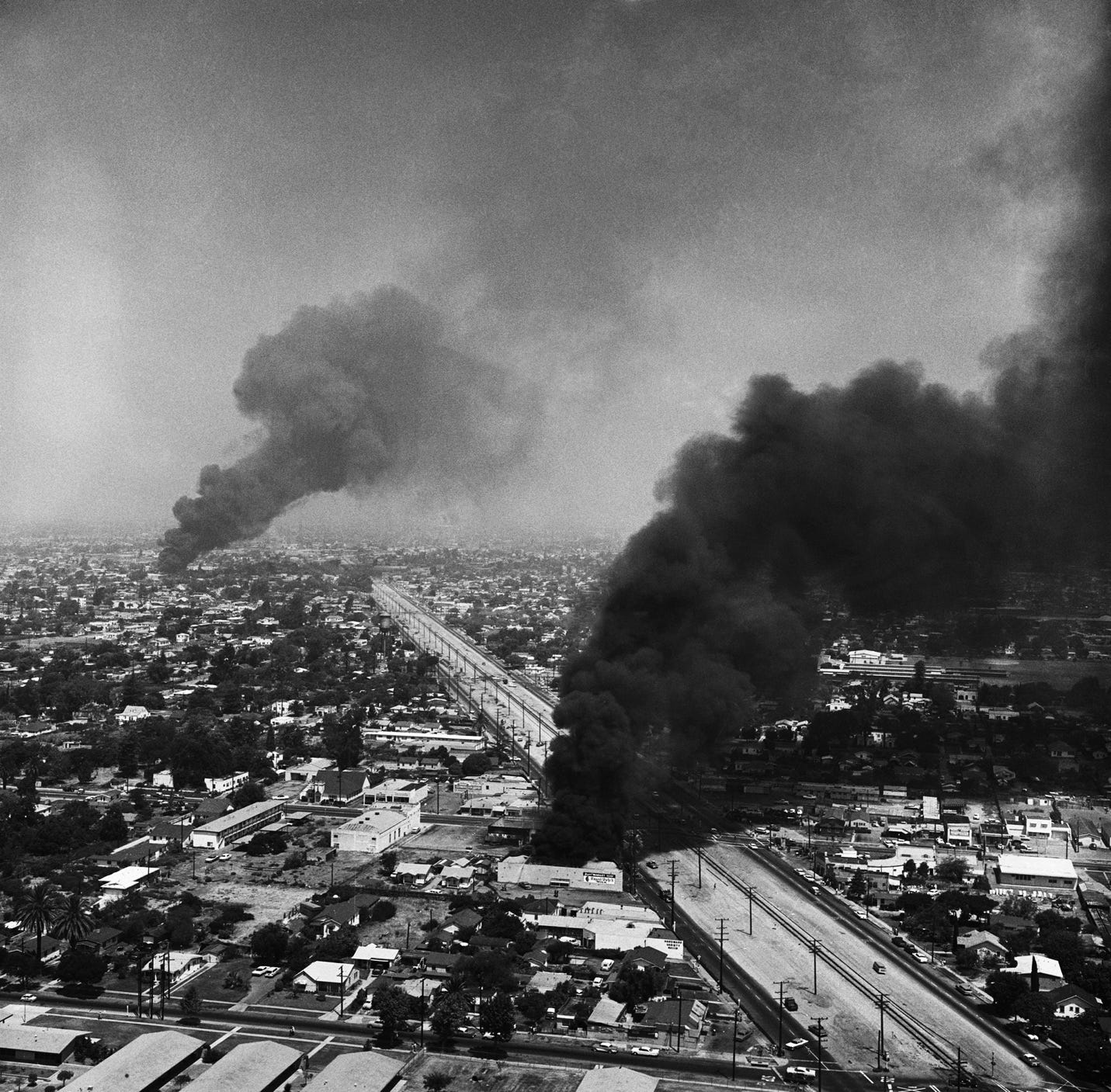
Keith Allison: We were shooting Where The Action Is up in the Hollywood Hills, and it was a night shoot, so we didn’t’ go to work ‘til sunset, and the Watts riot was already on the news, and they were warning us to stay off the streets, and, “Blah, blah, blah…”
So I’m standing out there in the Hollywood Hills, overlooking the city, and we were all told to dress up, with ties and sport coats, even the girl dancers were in evening dresses, so I’m looking way off in the distance, and I can see the fires, and hear nothing but sirens! Sirens were going off everywhere, you know?
And I could see Watts burning, and it was heartbreaking, really.
Gregg Jakobson: The Watts Riots were certainly like WOW, you know? But West LA is far enough away, that it’s easy to not be part of that, you know?
Walter Mosley: You could feel the rage. You know, you could feel that civilization, at that moment, was in tatters. And when I got home, my father was sitting in a chair in the living room, which he never did, drinking vodka and just staring.
And I said, “Dad, what’s wrong?”
He said, “Walter, I want to be out there. I want to be out there rioting and shooting, but I know it’s wrong. I want to do it, but I can’t do it….”
It tore him up, the emotions that were brought out in him.
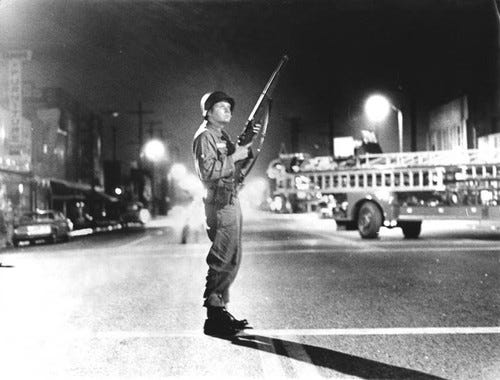
Betty Pleasant: I hated the National Guard like dogs, and I still do. I wanted to interview them, so a photographer and I came upon this massive barricade, and I felt something whiz past my ear, and I said to the photographer, “What was that?”
It was a bullet. We walked on up to the soldier who was shooting at us, and I asked him if it was his policy to shoot first and ask questions later? He said, “Yeah,” and for us to get our black asses away from there.
I said, “But we’re with the press!”
And he said, “I don’t give a damn if you’re press or not….”
Dick Gregory: I found myself right between riot-helmeted police, and a group of very angry, armed black men. This confrontation was in a housing project; clearly, people were going to die in this standoff.
I walked between the two groups, and tried to calm things down, but bullets started to fly, and I kept walking even after I felt a burning pain in my leg.
It took me a few more minutes to realize I’d been shot.
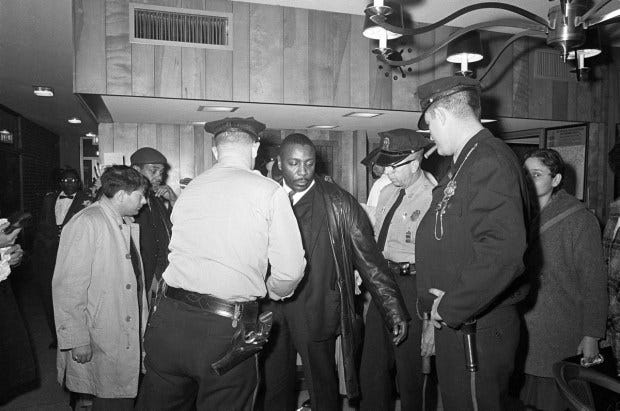
Dick Gregory: I couldn’t believe it! After all the marching I’d done in the south, after all the times I’d been arrested by redneck deputies in the past four years, here I was shot by a black man in California!
But I kept walking; either side could have easily killed me, but I think the brothers were as shocked as I was that I’d been hit, so I yelled at them, “Alright godammit, you shot me, now go home!”
And they turned and stared going back into their homes.
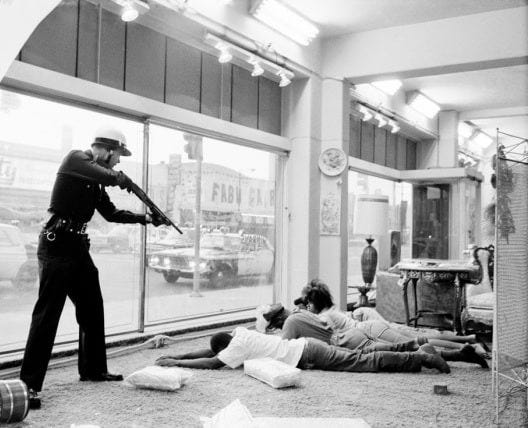
Betty Pleasant: On what must have been Day Three, everything was in ruins, and I understood that they were getting ready to do something else on 103rd, so I went over there to check it out, and got caught in the middle of a shootout between the residents and the cops. That was the first and only time I was afraid.
I was caught behind a boulder, which had been a building, but had been reduced to a pile of rubble. There was a cop a few yards away from me; he started moving toward me, and I said, “Get away from me! Don’t come near me! They’re shooting at you, and I don’t want them to miss you and shoot me!”
He told me I had to get down on my hands and knees and scoot along the ground behind what was left of this building. He said he’d cover me, but I was too scared to move. I started crying. I just lost it.
He was trying to get me to pay attention, and finally he screamed at me, “Go! Go! Go!” And I did what he said. I got away. I cried for the rest of the day.
After that, the bullets didn’t scare me.
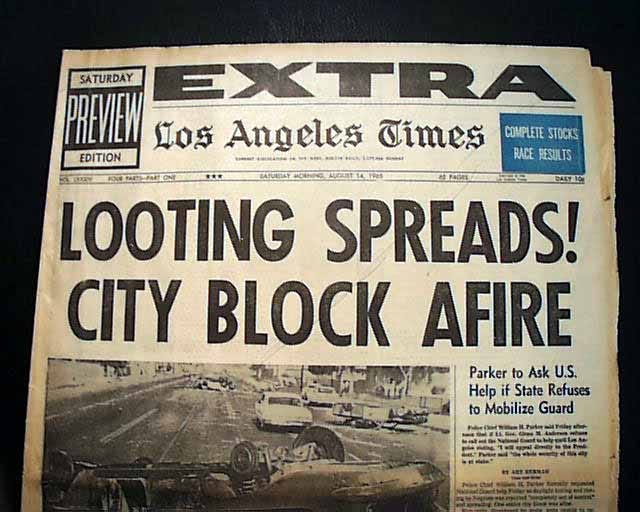
Jill Edy: Eight days of violence raged through the city, which resulted in thirty-four deaths, more than a thousand injured, with almost four thousand arrests, and an estimated forty million dollars in damages.
Huey Newton: [Defense Minister of the Black Panther Party] We knew it was time to stop talking and start organizing.
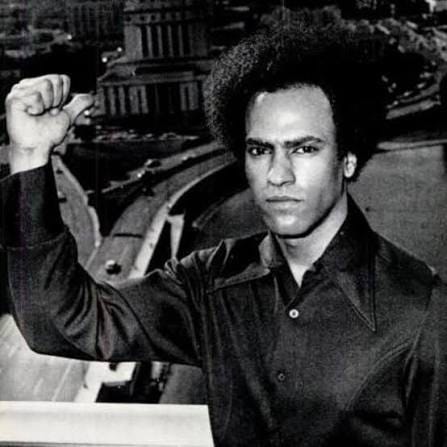
**&**
"You could feel the rage. You know, you could feel that civilization, at that moment, was in tatters."
Gonzalo Lira once remarked that American civilisation peaked in 1965.
I tend to agree, which makes it very difficult for me to talk to anyone about music as I am deeply suspicious of anyone who doesn't own at least one Petula Clark E.P.
I was in the 1981 Brixton riots.
https://www.youtube.com/watch?v=U4yBHUfIwwg
I would have been about 19 at the time. I didn't actually riot myself. I was living in Brixton and me and my little post-punk GF saw on the 6'o clock news "Brixton in Flames!!"
Naturally, we thought it would be a good idea to go out and wander around in Dante's Inferno for a couple of hours.
One thing that struck me at the time was, as I opened the front door, I felt this weird kind of adrenaline on the wind, and as we wandered down towards Brixton Road you got this strong impression that this wind would kind of hit people and then they'd go crazy apeshit and start smashing things and what have you.
I've often talked about this in pub tales and although I know that correlation is not necessarily causation, it's interesting to me that it turns out: The Brixton Riots of 1981 coincided with a massive CME.
"Modern analyses describe the April 1981 event as:
an intense interplanetary coronal mass ejection (ICME)
probably involving multiple structures (a magnetic cloud followed by a sheath region)
producing a double-dip geomagnetic storm
classified among the strongest geomagnetic storms of the Space Age
The storm's minimum Dst index was around −300 nT, putting it into the "severe" category.
The evidence suggests:
at least one major CME
with a complex internal structure
possibly interacting with another solar wind feature
resulting in two strong phases of geomagnetic disturbance."